
World Advanced Research Projects Agency

Rethinking the physics. Then building the machine.

WARPA develops aerospace, energy and quantum concepts from first principles and carries them through to final assembly.

Earth's horizon at sunrise seen from the stratosphere
6Programs
8Research lines
1992First published result
TRL 6Most mature system
§ 01 — Approach

From concept to prime contractor.

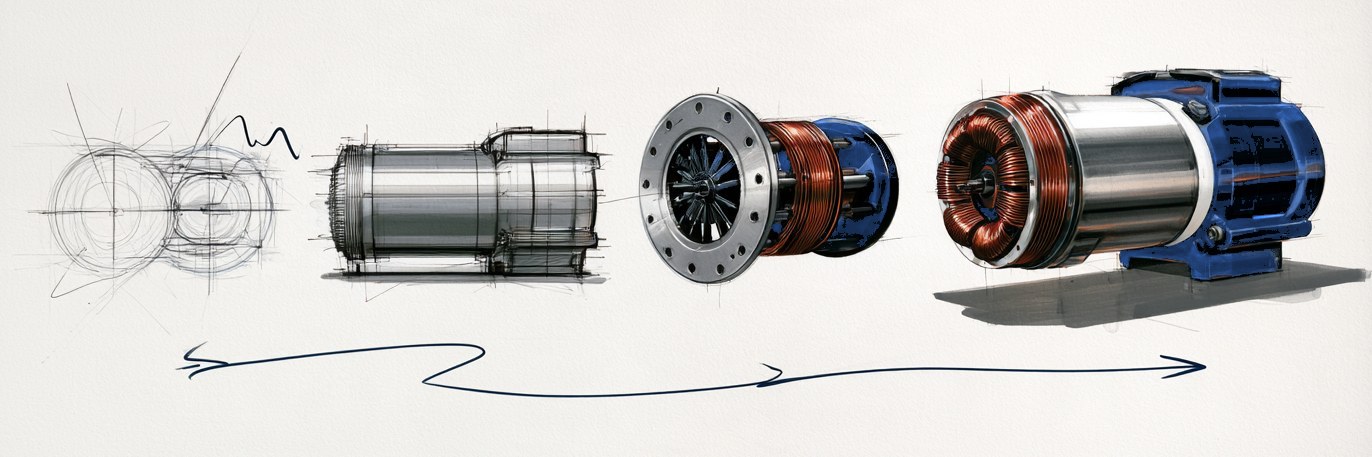
WARPA designs disruptive concepts, then delivers them. Once a design is proven, we act as prime contractor: we develop and produce the critical components in-house and perform final assembly.

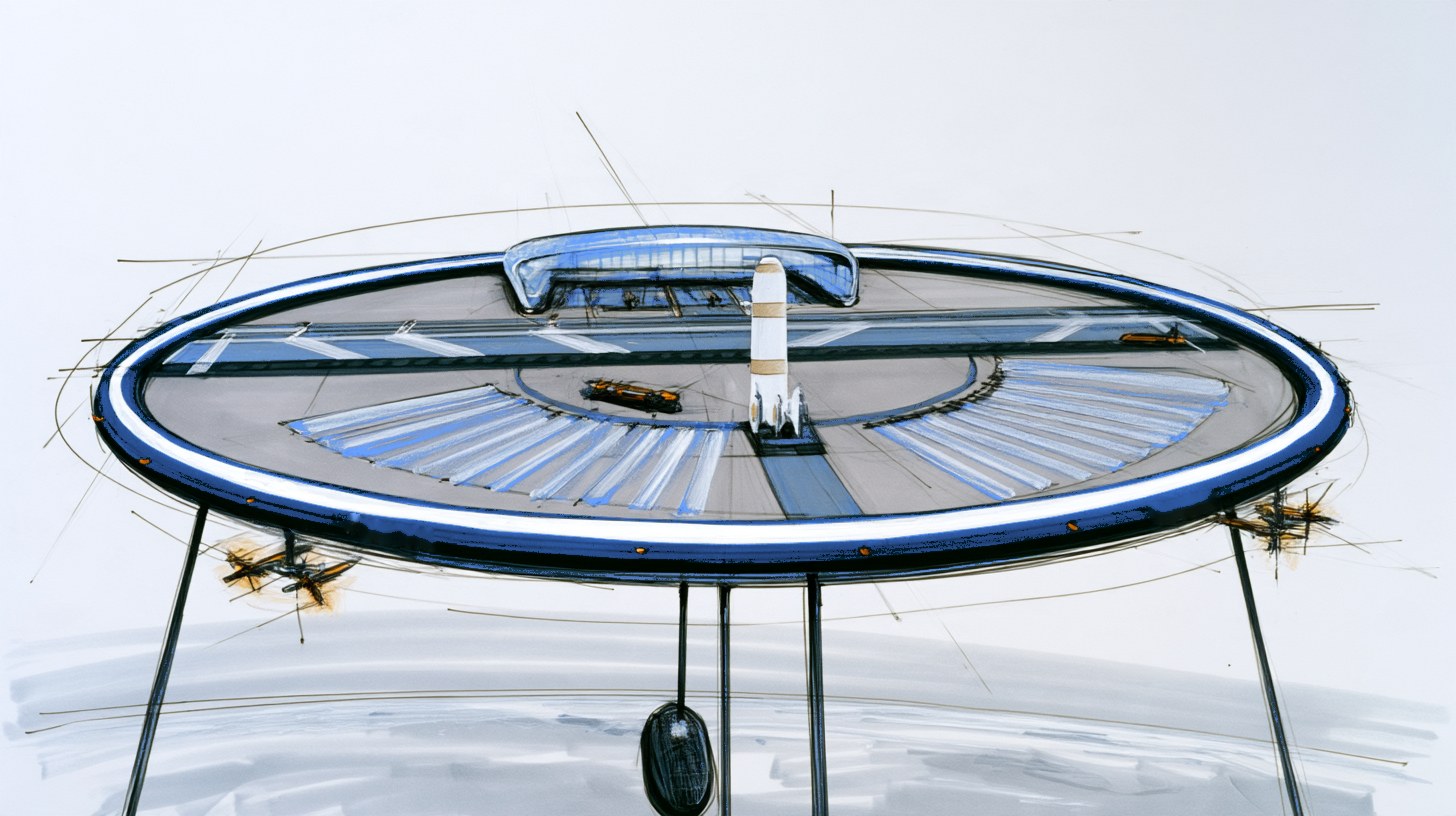
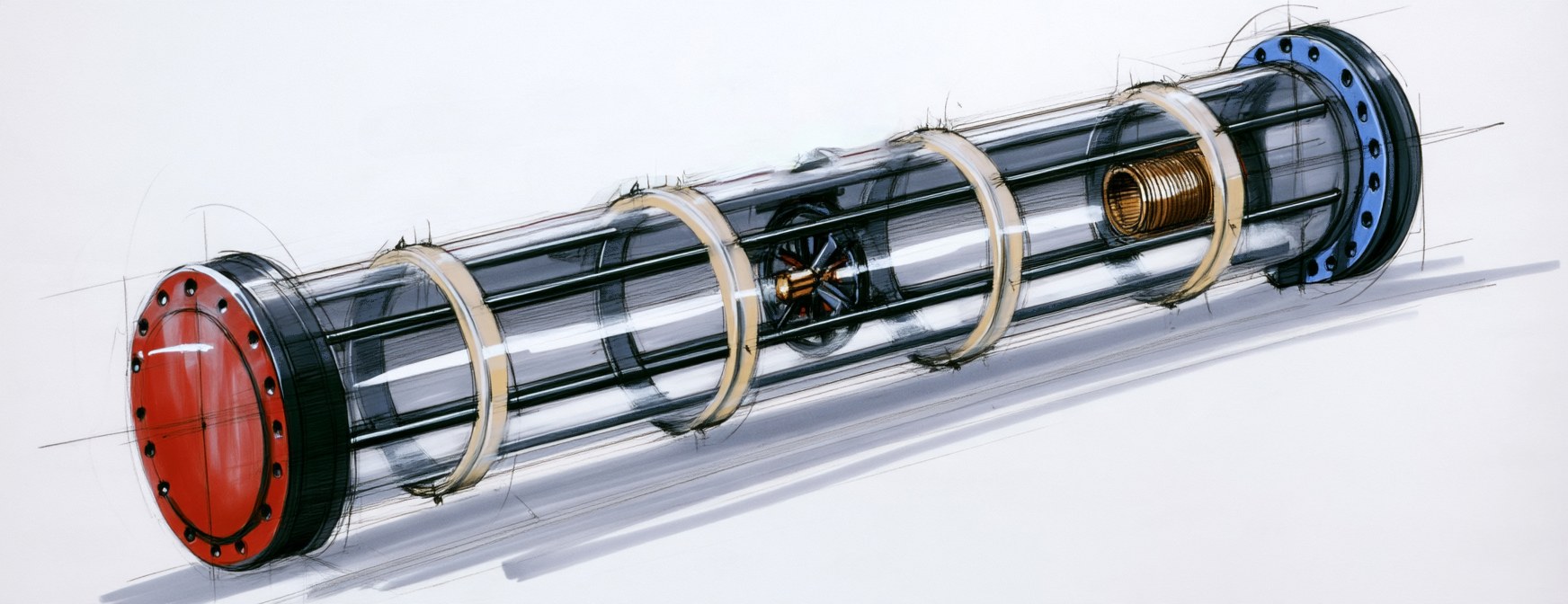
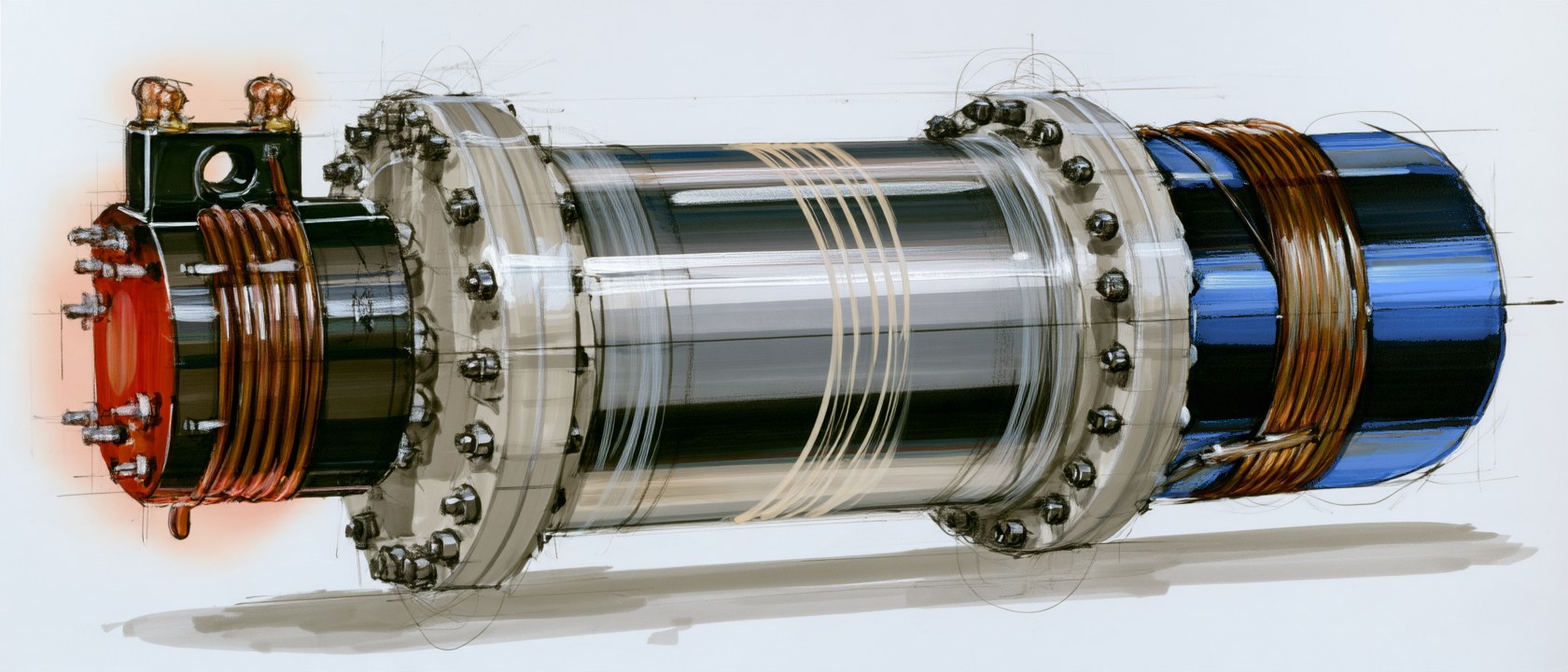
Four sketches of one machine, from loose geometric pencil study to concept sketch to exploded components to the finished rendered assembly
  1. 01First principles
  2. 02Concept design
  3. 03Critical components
  4. 04Final assembly

Values

  1. IntegrityIn our science, our partnerships and our claims.
  2. Respect for peopleInside the company and wherever our work reaches.
  3. A smaller human footprintEvery program aims to cut the environmental cost of what it replaces.

Strategy

  1. InnovationStarting from first principles, not incremental improvement.
  2. ESG leadershipEnvironmental, social and governance standards built in from the first design.
  3. FreedomTechnologies that widen access to transport, energy and secure communication.
§ 02 — Programs

Selected programs, at different stages of maturity.

Each program is labeled by how mature it is. Figures marked as design targets are engineering goals. Figures marked as measured come from testing.

Measured / tested Patented Concept design Theoretical — validation pending
P-01 Concept design

TeraDrone

Heavy-lift cargo airship
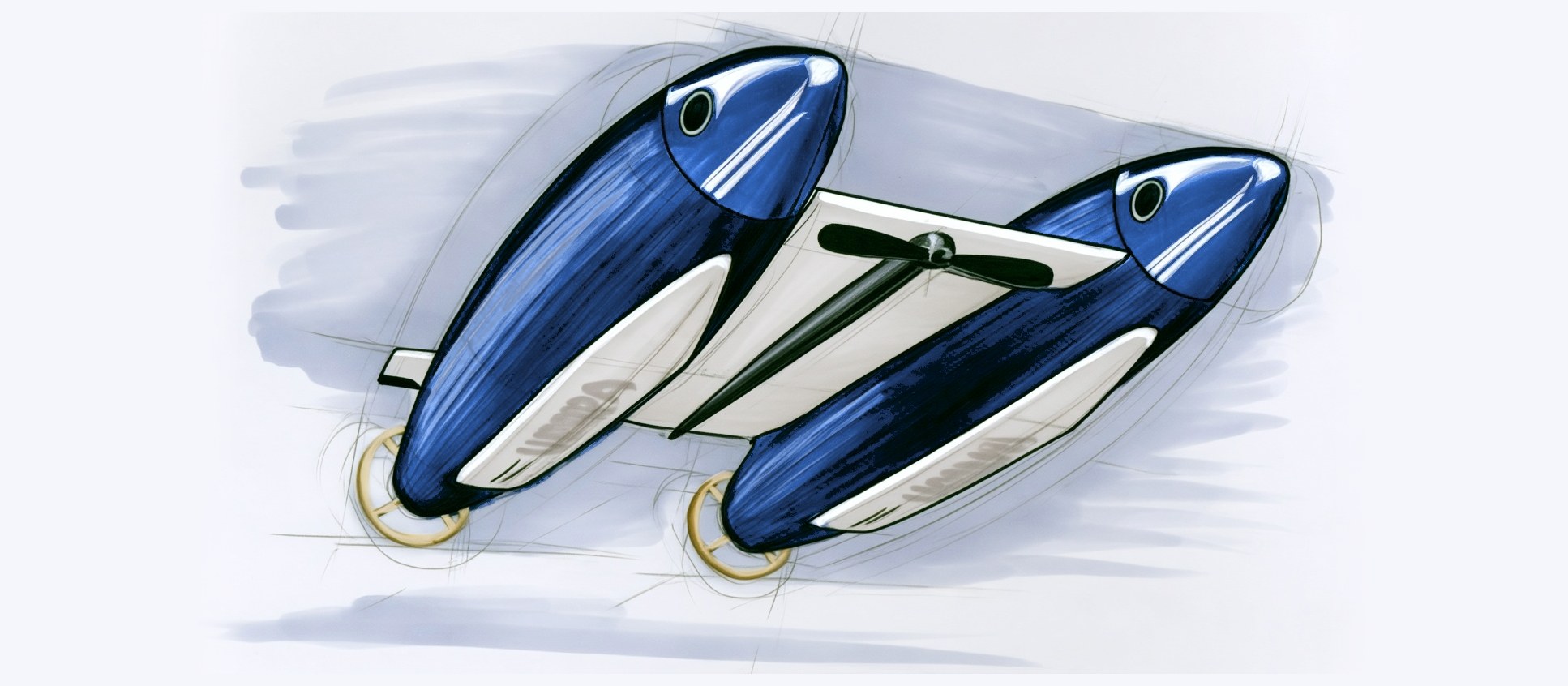
TeraDrone concept sketch

A hydrogen-lifted, fully autonomous airship designed in four sizes, carrying 100, 500, 1,000 or 10,000 tonnes point to point. It needs no runway and no hangar, and produces zero emissions in flight.

Built for green global logistics, it is designed to reach places no road, rail or port can serve.

Applications: freight, flying field hospitals, wildfire response, border surveillance, access for isolated communities, search and rescue, and silent zero-emission air transit for megacities.

Design targets
Payload100–10,000 t
Range60,000 km
Ceiling7,000 m
Top speed150 km/h
Transport cost€0.10 per tonne-km
Lift gasHydrogen
Operation100% autonomous · all-weather · all-terrain
Power40 × TAG generators at 100 kWe (P-04)
P-02 Concept design

Stratospheric Platform

Supersonic flight that goes higher to burn less
Stratospheric Platform concept sketch

The usual way to cut aviation emissions is to fly lower and slower. WARPA's concept does the opposite: it flies far higher and faster, in air thin enough that fuel burn falls.

The aircraft is small, so its shock wave is not expected to reach the ground. That would open overland supersonic routes that are closed to aircraft today.

Flight sequence
  1. Board on the ground, in a 50-seat supersonic aircraft.
  2. Ascend by lift, at 80 km/h, to a tethered platform at 40 km altitude.
  3. Launch from the platform, which serves as the runway. The aircraft leaves already at Mach 1.
  4. Dive, using gravity to accelerate to Mach 3.2 while descending to 30 km.
  5. Cruise at 30 km, where low air density means high speed for little fuel.
  6. Land at a conventional airport.
P-03 Patented Validation pending

X-Works Engine

Infinite Impulse space propulsion
X-Works engine concept sketch

Every spacecraft engine in service works by throwing mass out the back. That principle comes from the standard reading of Newton's third law.

X-Works rests on a different reading. WARPA's theoretical work describes a way to generate substantial thrust without expelling matter. The approach is patented, and experimental validation is the program's next milestone.

Projected capability, if validated
Earth → Mars≈ 1 week
Earth → Jupiter≈ 1 month
Proxima Centauri≈ 18 years for a 300 kg probe, peaking at c/2
Satellite lifetime≈ 30 years, vs. 15 (GEO) and 5 (LEO) today
Orbit & plane changesNo propellant cost
End of lifeControlled deorbit, or recovery for recycling
LaunchLower initial impulse, so a smaller launcher footprint
P-04 Measured · TRL 6

TAG

Heat to sound to electricity
TAG thermoacoustic generator concept sketch

Electricity always has to be generated from something else, and today's methods typically convert about 30% of their fuel energy into power.

The TAG starts at 50% fuel-to-electricity, with a practical ceiling near 65%. Heat from a source such as a burner is carried in by heat pipes, turned into sound, and the sound is turned into electricity.

The TAG has been demonstrated at TRL 6 and is the power plant specified for TeraDrone.

Measured characteristics
Efficiency≥ 50% (ceiling ≈ 65%)
External noise40 dB
ReliabilityMTBF 200,000 h
Specific power> 1 kWe/kg
Power range0–500 kWe
FuelMulti-fuel · zero-emission capable
IntegrationCars, ships, aircraft
§ 03 — Research

Three decades of foundational work.

Underneath the programs sits a body of theoretical research in cryptography and in a non-Archimedean formulation of quantum physics. Each line below shows what has been published and the experiment that comes next.

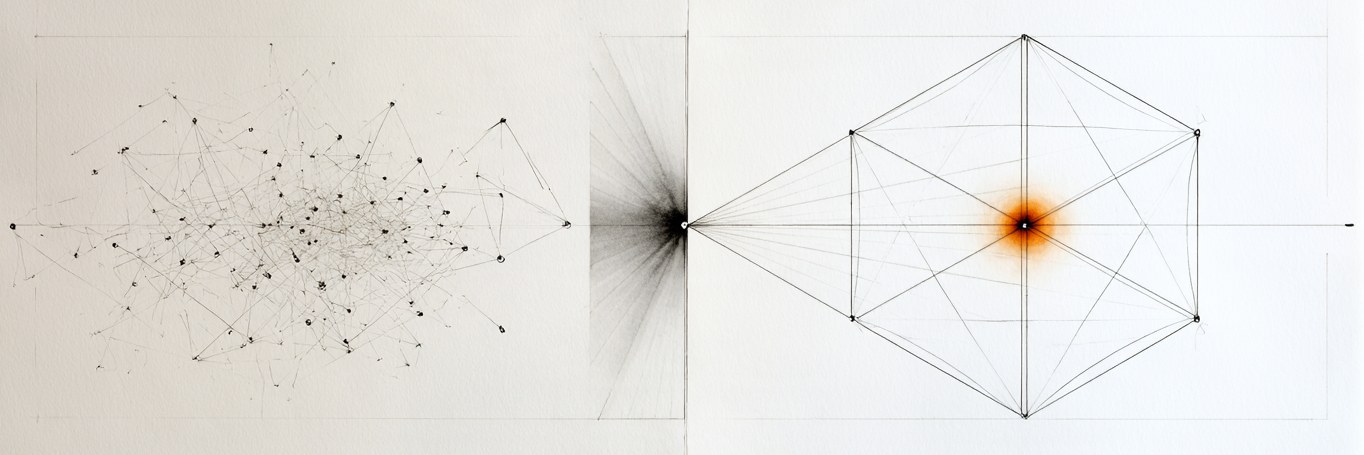
Sketch: a loose constellation of points converging into a precise projective geometry structureCryptography: A New Perspective
  • 1992

    One-round zero-knowledge proof of knowledge

  • 2002

    Non-Archimedean quantum physics program begins

  • 2014

    Secure-communication protocol and analog quantum computing, presented at Catacrypt

  • 2017

    Zero-knowledge protocol shown to be post-quantum, presented at Catacrypt

  • 2021

    Secret-key distribution added to the protocol

R-01

Post-quantum cryptography

Published

Record

1992
A zero-knowledge proof of knowledge completed in a single round, in the Fiat–Shamir sense.
2017
The algorithm is shown to be both tractable and post-quantum. Presented at Catacrypt 2017.
2021
Secret-key distribution added, with the zero-knowledge property kept. The software has been proposed for flight testing aboard the International Space Station.
R-02

Non-Archimedean quantum physics

Theoretical

Record

2002 →
A reformulation of quantum physics that drops the Archimedean axiom from the discipline's founding set, producing a more general mathematical framework.
R-03

Quantum radar

Theoretical

Design objective

Method
Finite projective geometry applied to the R-02 framework.
Target
Target resolution of 10⁻⁷ m at a range of 100 km, with no echo return required for detection. Stealth would offer no protection against it.
R-04

Tap-proof communication

Published  Validation pending

Record

2014
Time-knot theory brought into quantum physics, producing a protocol presented at Catacrypt 2014. It is designed so that it cannot be intercepted. The work also proposes that it carries information faster than light while remaining consistent with relativity, by decoupling information from energy transfer.
R-05

Analog quantum computing

Published  Validation pending

Record

2014
The principle of an analog quantum computer designed to handle NP-complete problems, derived from the R-02 framework. Presented at Catacrypt 2014.
§ 04 — Founder

Jean-François Geneste

Chief Executive Officer
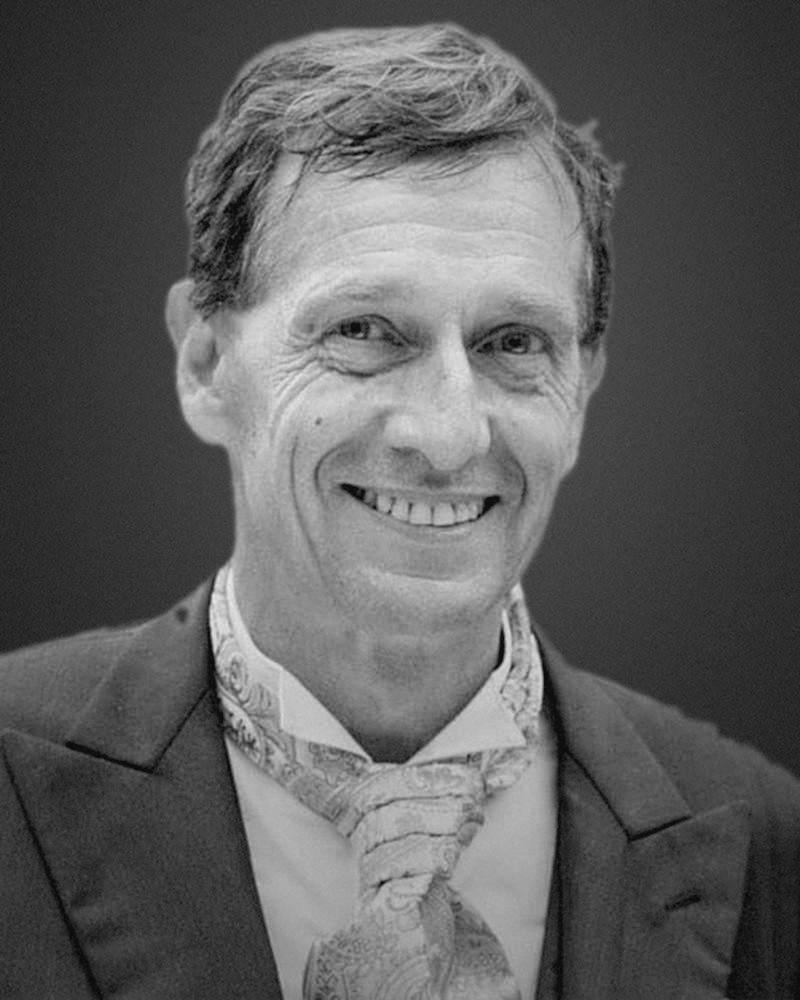
Jean-François Geneste, founder and CEO of WARPA

More than 40 years in aerospace and defense. Former VP and Chief Scientist of EADS/Airbus Group.

Around 30 patents · Royal Aeronautical Society speaker, September 2026

Author of some ten books on defense, physics, mathematics, cryptography and philosophy.

“The future of mankind lies in the mastery of the infinite.”